
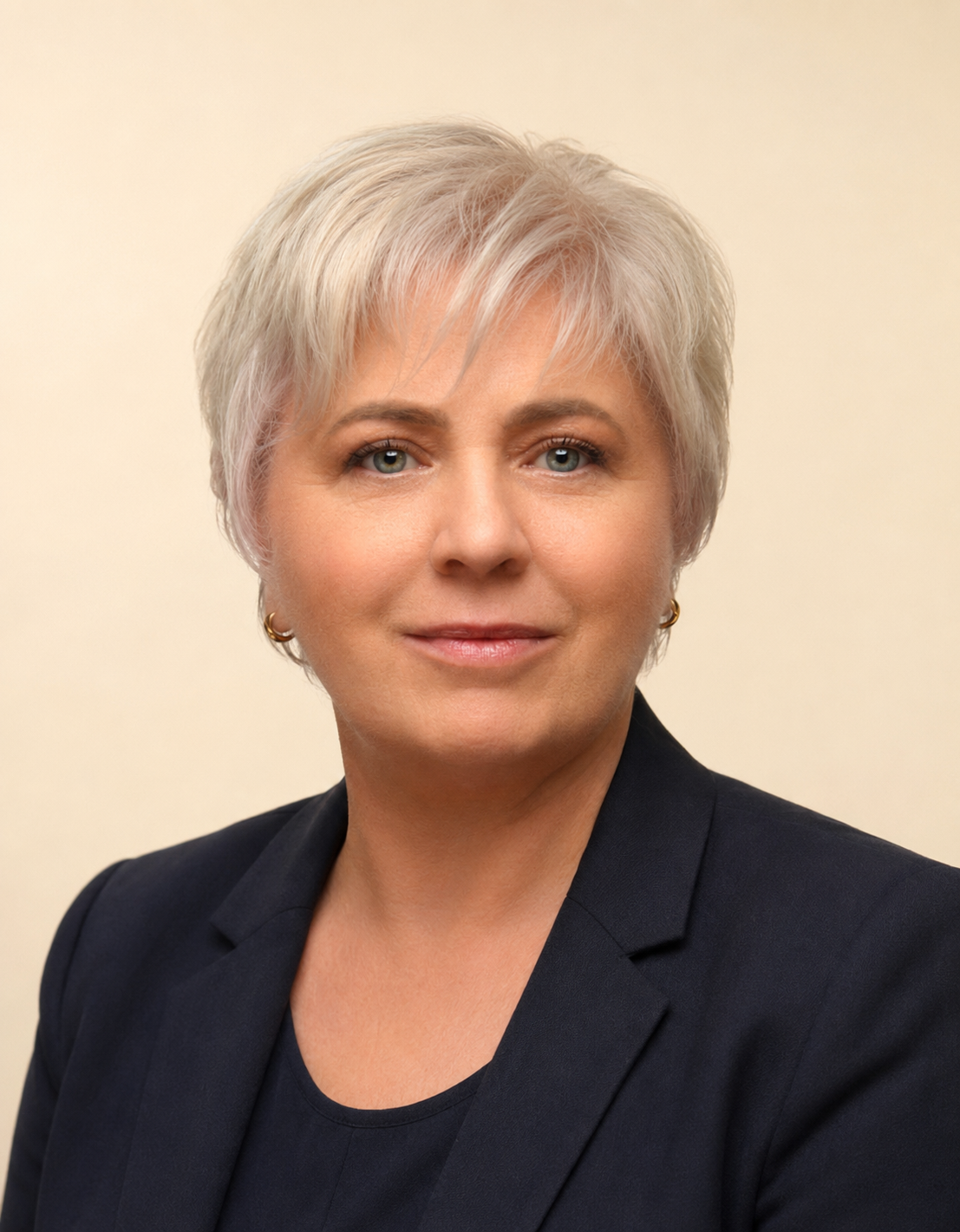
Why Beata Schäfer

Experience meets genuine commitment.

Beata Schäfer brings more than 30 years of international experience across software, services and consulting. She connects market understanding, partner ecosystems and pragmatic execution with a personal commitment to understanding individual needs.

  • International IT and management experience
  • Direct collaboration without unnecessary layers
  • Flexible services shaped around real needs

Career impact

50+ partners
Expanded and strengthened a software partner ecosystem across DACH and CEE.
~14,000 accounts
Brought structure and commercial focus to General Business accounts at a global enterprise software company.
100+ people
Built and scaled regional organisations and operations.
350+ vendors
Managed and developed technology vendors and launched an EMEA Solutions Center of Competence at a technology distributor.
100+ partners
Built international partner networks through Way2Value assignments.
1,000+ C-level executives
Engaged senior executives through international market-development initiatives.
Beata Schäfer
“

Good solutions begin with understanding – in business and in everyday life with a dog.

Academic Foundation

International business experience supported by a foundation in finance, management, international business, biotechnology and chemical engineering.

  • MBA in International Business / Management
  • Postgraduate Certificate and Diploma in Management
  • B.Sc. Finance and Banking
  • Gdańsk University of Technology (Politechnika Gdańska) — three years of study in Biotechnology and Chemical Engineering; no degree awarded.

Selected Professional Development

A curated selection of 37 documented credentials and professional-development records, bringing together learning from Microsoft, Oracle, QAD, Baan, Atos Origin, Tantum, NewFrontiers and SAP. This complements broad ERP and cloud experience, including IFS and hands-on QAD MFG/PRO and Baan implementations.

  • Partner Management & Channel Operations
  • Strategic Sales & Business Development
  • Negotiation & C-Level Engagement
  • ERP & Cloud Ecosystems
  • Presenting Complex Information
  • Design Thinking & Customer-Centred Innovation
Selected CredentialsSelected Credentials & Professional DevelopmentOpen the curated document →

Earlier Thinking. Current Relevance.

In 2019, while working at ALSO, I developed a two-part editorial series exploring how artificial intelligence and service robotics could support people, simplify complex processes and create new business opportunities. The technologies have evolved significantly since then. Yet many of the questions remain remarkably current: How do we turn technological capability into practical value? How do we support adoption? And how do we ensure that technology helps people rather than simply adding another layer of complexity?

Artificial Intelligence & CleverGuides · POINT Magazine · 2019

From AI Mystery to Practical Guidance

The first article introduced artificial intelligence through practical business applications including natural-language processing, virtual assistants, machine learning, decision management and robotic process automation.

The example of CleverGuides and the humanoid robot Pepper demonstrated how guided-selling technology could support customer conversations, qualify opportunities and relieve employees of repetitive preparatory work.

Looking back from 2026, the interface has changed, but the central idea remains relevant: AI creates value when it makes complex decisions easier, supports people in their work and is applied with realistic expectations.

German edition · SwitzerlandFrench edition · SwitzerlandGerman edition · Germany

AI, Service Robotics & Humanizing Technologies · POINT Magazine · 2019

Making Robotics Useful

The second article looked more deeply at the role of service and telepresence robots in everyday business. Humanizing Technologies showed that hardware alone was not enough: intuitive software, practical applications, reliable support and an ecosystem capable of bringing the solution to market were equally important.

The examples ranged from remote participation and customer guidance to reception, analytics and lead generation.

What remains relevant today is the importance of usability. Technology is not truly human-centred because it looks or sounds human. It becomes human-centred when people can understand it, use it confidently and achieve something valuable with it.

German edition · Germany

Original publications prepared during my work at ALSO and published under my former name, Beata Mierzwinska. Revisited today as part of the professional archive of Beata Schäfer.